

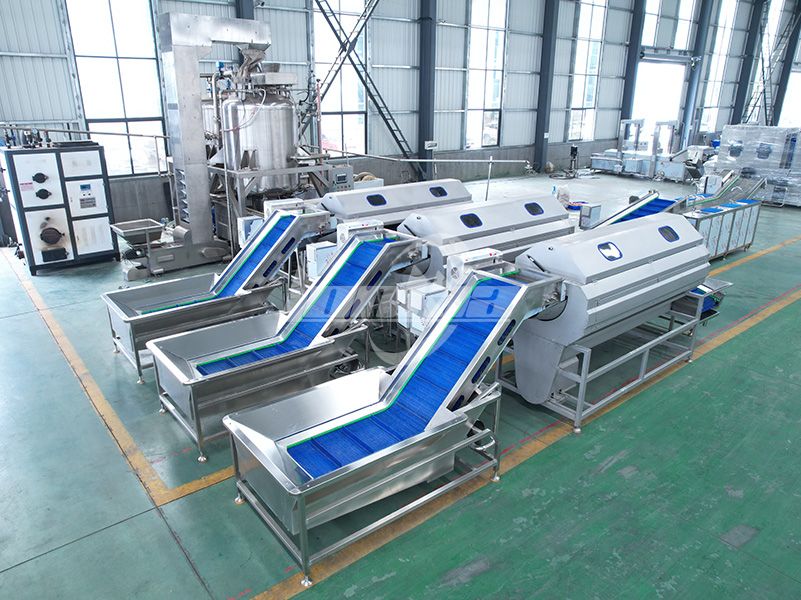
When purchasing a potato washing and peeling machine, many customers focus primarily on price, but it is often the choice of production capacity that truly affects the equipment's performance. If the equipment's capacity does not match actual production needs, it will not only impact production efficiency but may also increase operating costs. Therefore, it is crucial to understand the key factors affecting production capacity before selecting a model. Roller-brush potato washing and peeling machines typically combine rotating brush rollers with high-pressure spray nozzles to continuously perform washing and peeling operations. They are suitable for root and tuber vegetables such as potatoes, carrots, ginger, and sweet potatoes.
Determining Equipment Throughput Based on Raw Material Characteristics
Different raw materials directly affect the equipment's actual processing capacity. Factors such as the uniformity of potato size, the amount of dirt on the surface, the thickness of the skin, and whether the potatoes have undergone pre-sorting all influence the cleaning efficiency of the roller brushes.
If the raw materials are relatively uniform in size, the brush rollers can maintain stable contact, resulting in more even washing and peeling; if there is significant variation in size, a certain processing margin should be factored in to prevent a drop in efficiency caused by material buildup. Therefore, when selecting a potato washing and peeling machine, one should not rely solely on the rated capacity but make a comprehensive assessment based on the actual characteristics of the raw materials.
Continuous Production Capacity Is More Important Than Rated Capacity
Many customers tend to directly compare the hourly processing capacity listed on the equipment, but the stability of continuous operation is equally important. A roller brush washing and peeling machine with stable performance should be capable of continuous conveying, uniform tumbling, and stable spraying, ensuring that the raw materials maintain full contact with the brush rollers throughout the entire washing process, thereby guaranteeing consistent cleanliness for every batch of product.
Equipment manufactured from food-grade 304 stainless steel maintains excellent structural stability, and brush rollers that have undergone wear-resistant treatment can sustain consistent peeling performance over the long term, reducing capacity losses caused by wear and tear.
Equipment Structure Determines Actual Processing Efficiency
Production capacity is influenced not only by motor power but, more importantly, by the overall structural design of the potato washing and peeling machine.
For example, the number of brush rollers, their length, arrangement, and the high-pressure spray system all affect the residence time of the material within the equipment. A well-designed brush roller layout allows potatoes to roll continuously, increasing the contact area with the brush rollers. Combined with the spray system, this rapidly rinses away mud and shed skin, thereby improving overall processing efficiency.
Additionally, the hardness of the brush rollers can be adjusted according to different raw materials, enabling the potato washer and peeler machine to achieve efficient peeling while minimizing damage to the product's surface—a key consideration for many food processing companies.
Reserving Sufficient Capacity for Downstream Production Lines
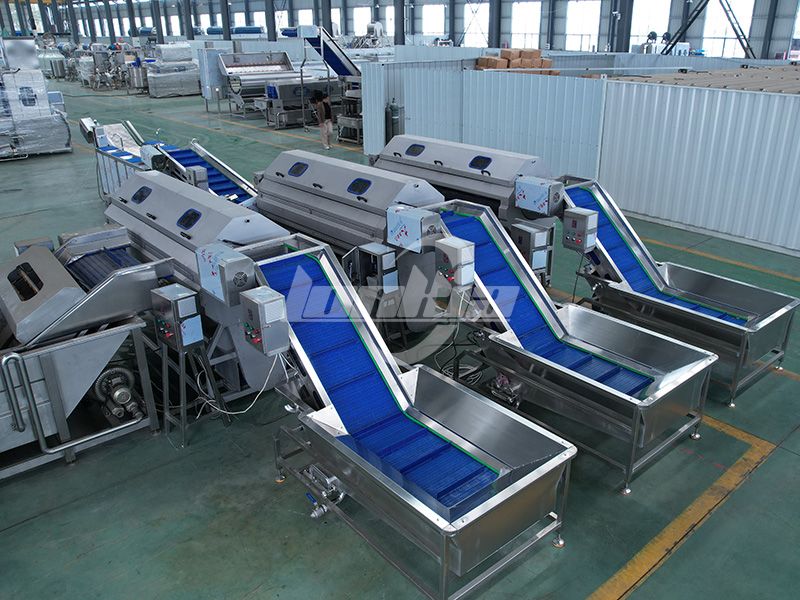
Potato washing and peeling is typically only the first step in the production process, which may be followed by slicing, dicing, blanching, frying, or packaging equipment. If the processing capacity of the upstream equipment is insufficient, it can easily cause delays or material jams along the entire production line.
Therefore, when planning a production line, the compatibility between various pieces of equipment should be comprehensively considered to ensure that the washing and peeling equipment can provide a continuous and stable feed, thereby improving the overall operational efficiency of the line. Lonkia can provide customized solutions—including roller brush configurations, spray systems, and equipment dimensions—tailored to different production processes, ensuring the equipment better adapts to subsequent processing steps.
Conclusion
When selecting a potato washing and peeling machine, the key considerations go beyond the equipment's rated output to include raw material characteristics, brush roller design, continuous operation capability, and compatibility with the entire production line. A well-designed roller-brush washing and peeling machine can ensure stable, continuous operation while maintaining high cleaning quality and peeling effectiveness, thereby providing a reliable foundation for subsequent processing. Thoroughly understanding these key factors before purchasing will help companies select equipment that better meets their actual needs and improve overall production efficiency.