

For companies planning to build a fresh-cut vegetable processing plant, a central kitchen, or a ready-to-eat vegetable production facility, "How much does a vegetable processing line actually cost?" is almost always the top concern before making a purchase. However, in reality, investment costs are influenced not only by equipment quotes but also by whether the configuration of the entire production line aligns with the product's processing requirements and production needs.
Rather than focusing solely on price, it is more important to consider whether the equipment can operate reliably, meet production capacity requirements, and deliver sustained value for future production.
Key Factors Determining the Cost of a Vegetable Processing Line
1. Processing Technology Determines Equipment Configuration
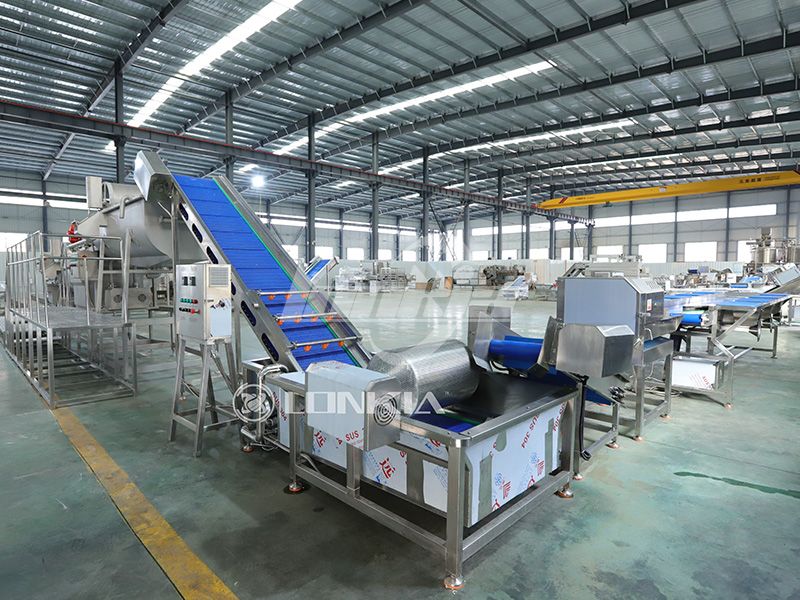
The processing workflows vary depending on the product. A complete vegetable processing line typically includes multiple stages such as sorting, washing, cutting, rinsing, dehydration, conveying, and packaging. Some products also require additional steps such as peeling, grading, or weighing.
The more comprehensive the processing workflow, the more extensive the equipment configuration—and consequently, the total investment in the line will vary. Established equipment suppliers typically tailor configurations to the customer's specific processing needs rather than relying on fixed solutions.
2. Equipment Performance Affects Long-Term Operating Costs
When purchasing equipment, one should not merely compare initial prices but should focus more on the manufacturing quality of the equipment itself.
For example, a food-grade 304 stainless steel structure, a stable PLC control system, and high-quality motors and transmission components not only ensure long-term continuous operation but also reduce failure rates and maintenance costs. For factories operating continuously every day, equipment stability is often more important than the purchase price.
3. The Level of Automation Affects Overall Investment
The higher the level of automation, the fewer workers the entire vegetable production line requires, and the more stable the production cycle becomes.
Modules such as automatic conveying, automatic cleaning, automatic cutting, and automatic packaging may increase the initial equipment investment but can effectively reduce manual labor and improve product consistency, making them particularly suitable for enterprises engaged in long-term continuous production.
Several Costs Easily Overlooked During Procurement
Many procurement personnel focus solely on the equipment price while overlooking the costs that may arise during subsequent operations.
For example, whether the equipment is easy to clean on a daily basis, whether wear-and-tear parts are easy to replace, whether the electrical control system is easy to maintain, and whether the production line supports future expansion and upgrades—all of these factors directly impact the equipment's operating costs over the coming years.
Additionally, there are significant differences among manufacturers in terms of their ability to design complete production lines. A well-planned equipment layout can reduce material transport distances, streamline processes such as washing, cutting, and dehydration, and thereby improve the overall operational efficiency of the line.
How to Maximize the Investment Value of the Entire Production Line?
A truly valuable vegetable processing production line is not one with the most equipment, but rather one where every piece of equipment meets the product processing requirements and maintains stable, efficient operation.
During the design phase, it is recommended that suppliers thoroughly understand the product types, cutting specifications, daily output, workshop layout, and future expansion plans before configuring the entire line. Modular design also reserves interfaces for future equipment additions, avoiding redundant investment during upgrades.
Lonkia provides customized production line solutions tailored to different vegetable processing methods, ensuring seamless integration from washing and cutting to dehydration, conveying, and packaging, thereby helping customers establish more stable and efficient production processes.
Conclusion
For vegetable processing companies, equipment price is only one factor in the procurement decision. What truly impacts return on investment is whether the production line can ensure stable production, reduce maintenance costs, improve product quality, and meet future growth needs.
Therefore, when evaluating a vegetable processing line, one should comprehensively consider process configuration, equipment quality, automation levels, ease of maintenance, and future expansion capabilities—rather than simply comparing quotes. Only by selecting equipment that truly suits your specific products and production model can you maximize the value of every investment.