

Peeling pineapples may seem simple, but in continuous processing, the peeling results directly impact subsequent steps such as slicing, dicing, and canning. When selecting a pineapple peeling machine, many customers focus solely on the machine's production capacity while overlooking factors such as raw material specifications, blade condition, peeling depth, and machine adjustments. In reality, all these factors affect the final peeling quality and pulp loss.
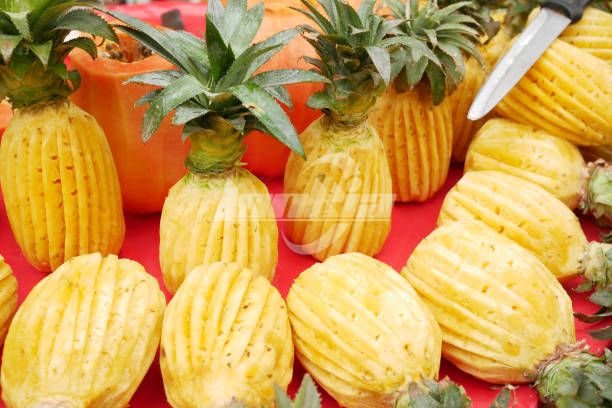
Raw Pineapple Specifications Affect Peeling Results
1. Pineapple Size and Shape
The length, diameter, and shape of pineapples may vary from batch to batch. If there are significant variations in raw material dimensions, the machine's positioning and blade operation will also change accordingly, thereby affecting the peeling thickness.
Therefore, when purchasing a pineapple peeling machine, customers should provide the primary range of pineapple sizes in advance, rather than just the hourly processing capacity. Accurate raw material parameters help determine a more suitable equipment configuration.
2. Ripeness and Skin Condition
As pineapples vary in ripeness, the hardness of the skin and the condition of the flesh also change. Raw materials that are too hard or too soft can both affect the cutting performance of the blades. Consistent raw material specifications allow the equipment to maintain a more uniform processing state.
Blade Design Directly Affects Peeling Quality
1. Peeling Thickness Must Be Properly Controlled
If the cutting depth is too shallow, residual peel may remain; if it is too deep, more edible flesh will be removed. Therefore, peeling requires striking a reasonable balance between removing the outer skin and preserving the flesh.
Lonkia's pineapple peeling machine uses rotating blades for continuous peeling, combined with a pineapple eye removal mechanism, enabling the equipment to remove both the main peel and any surface residue.
2. Blade Condition Must Also Be Inspected Regularly
After prolonged operation, blade wear may cause changes in cutting performance. If you notice an increase in residual peel, uneven peeling thickness, or a significant increase in pulp loss, you should promptly inspect the condition of the blades and related components.
Eye Removal Affects Final Product Quality
The "eyes" on a pineapple's surface are irregularly distributed and represent a critical part of the peeling process. If a significant number of pineapple eyes remain after peeling, additional manual processing will be required, disrupting the continuous operation of the entire production line.
Therefore, when selecting automatic pineapple peeling machine, one should not focus solely on "peeling speed"; it is also essential to ensure the equipment has effective pineapple eye removal capabilities. This machine is equipped with an automatic eye-removal system that handles pineapple eyes and residual parts during the peeling process, thereby reducing the need for subsequent manual processing.
Equipment Specifications Must Match Production Requirements
The stated capacity of a pineapple peeling machine does not guarantee that the same processing results will be achieved under all conditions in actual production. The reference capacity listed on the product page is 1–3 metric tons per hour, with a power rating of 5.5 kW. The main body of the equipment is made of SUS304 stainless steel, and dimensions can be customized according to specific needs.
When selecting a model, customers should comprehensively consider raw material specifications, actual feed rate, and the processing speeds of upstream and downstream processes. If the upstream feed rate does not match that of the peeling machine, it will be difficult to maintain stable, continuous production—even if the equipment itself has a high processing capacity.
How to Achieve More Consistent Peeling Results?
Before purchasing pineapple peeler machine, we recommend that customers prepare the following information:
- Average pineapple size and size range
- Hourly raw material throughput
- Final product form
- Required peeling thickness
- Whether pineapple eyes need to be removed simultaneously
- Equipment configurations for preceding and subsequent processes
The more complete this information is, the easier it will be to match the equipment configuration to actual production needs.
Conclusion
The peeling performance of a pineapple peeling machine is influenced not only by the machine itself but also by raw material specifications, blade design, peeling depth, pineapple eye handling, and the alignment of equipment parameters—all of which have a direct impact. For customers requiring stable, continuous processing, clarifying these conditions before purchasing is more important than simply comparing equipment prices or rated production capacity. Selecting the appropriate equipment configuration ensures peeling quality while minimizing unnecessary pulp loss and provides a stable supply of raw material for subsequent pineapple processing steps.