

In industries such as beverages, condiments, and dairy products, the thorough cleaning of glass bottles directly impacts product quality and hygiene safety. Consequently, an increasing number of factories are adopting automated glass bottle washing machines to ensure consistent and reliable cleaning results both inside and outside the bottles. To help customers better understand the equipment's structure and operational methods, this article provides a systematic analysis of the working principles of glass and bottle washers.
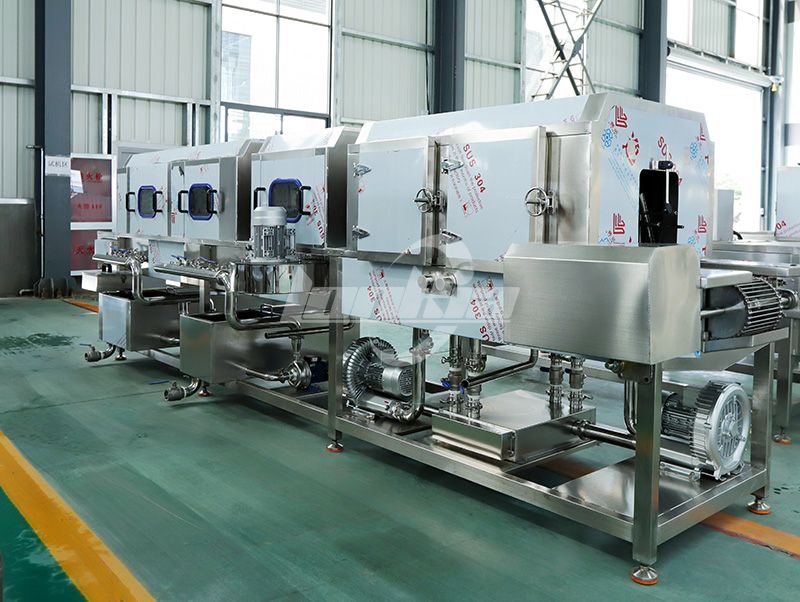
Structure of Glass Bottle Washing Machines
Glass and bottle washers typically consist of a conveyor system, soaking zone, spray system, circulating water filtration system, heating module, and control system.
- Conveyor System: Responsible for steadily transporting bottles to each cleaning zone. Speed is adjustable to accommodate varying production demands.
- Soaking Zone: Bottles are immersed in warm water to soften residues on the bottle walls, enhancing the efficiency of subsequent spraying.
- High-Pressure Spray System: The core functional zone, featuring uniformly distributed nozzles that rinse bottles inside and out from multiple angles.
- Recirculating Filtration System: Filters impurities from both inside and outside bottles, enabling water resource recycling while ensuring spray water remains clean and free of contaminants.
- Heating Module: Enhances cleaning capability by controlling water temperature, particularly effective for cleaning bottles containing sugar-based beverages or oil residues.
- Electrical Control System: Manages overall machine logic control, ensuring a stable and consistent cleaning process.
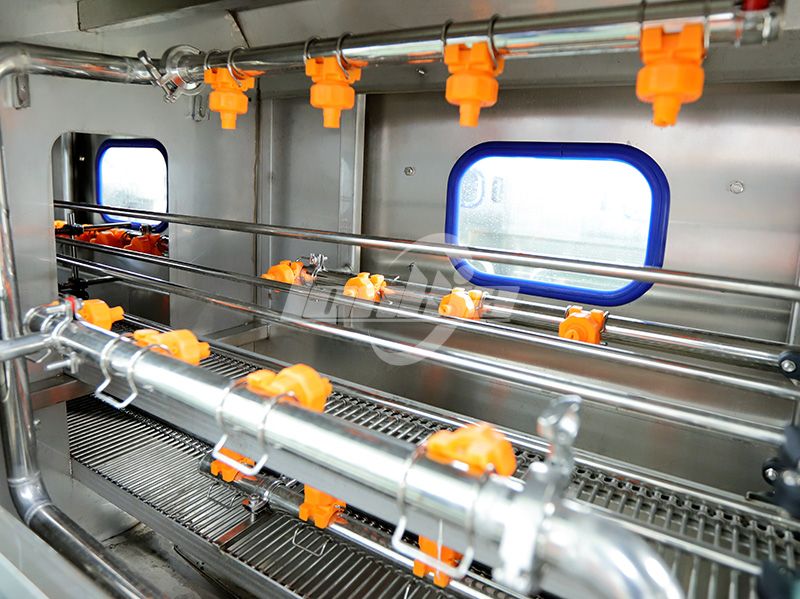
Lonkia's glass bottle washing machines prioritize structural stability and simplicity, focusing on enhanced spray efficiency and ease of maintenance for long-term customer use.
Bottle Washing Process
The entire cleaning process typically involves five key steps:
- Automatic Bottle Feeding and Positioning: Upon entering the conveyor track, bottles automatically adjust orientation to ensure the bottle opening faces upward or downward (depending on equipment design), providing precise direction for spray cleaning.
- Warm Water Soak to Soften Residues: Bottles may carry beverage residues, powders, or stains from recycling or storage. The soak zone uses controlled water temperature to soften internal and external residues, reducing spray resistance.
- Multi-Angle High-Pressure Spray Rinse: High-pressure nozzles rinse from multiple angles—bottle mouth, sides, and base—forming the critical cleaning stage. Pressure adjustments ensure thorough cleaning of key areas throughout the process.
- Pure Water Spray for Final Rinse: The final stage uses purified water to prevent detergent residue on bottle walls, ensuring compliance with food-grade filling requirements.
- Automatic Bottle Discharge and Transfer to Next Process: Cleaned bottles automatically proceed to subsequent stages such as drying, inspection, or filling, maintaining continuous and stable production line operation.
Summary
The operational principle of glass bottle washing machines comprises multiple critical stages, each directly impacting final cleaning efficacy. For food and beverage plants, understanding the equipment's functioning is essential for selecting the optimal model for their production line. Whether prioritizing cleaning performance, operational costs, equipment longevity, or maintenance convenience, a well-designed structure and reliable core components serve as key criteria for selecting glass bottle washers.