

The price of a passion fruit washing machine depends not only on the equipment itself but also on its processing capacity, washing method, level of automation, and supporting equipment. For companies planning to purchase passion fruit processing equipment, understanding the key factors that influence bubble washer price can help them plan their budget effectively and select equipment that meets their production needs.
What Factors Affect the Price of a Passion Fruit Washer?
1. Equipment Processing Capacity and Specifications
Processing capacity is a key factor affecting the price of a passion fruit washing machine. The width of the mesh belt, the dimensions of the washing tank, the conveyor speed, and the motor configuration all influence the equipment's manufacturing costs. When purchasing, equipment specifications should be determined based on hourly throughput, daily production hours, and the processing capacity of subsequent production stages to avoid production efficiency issues caused by mismatched capacity.
2. Cleaning Method and Equipment Configuration
Bubble washers clean the fruit surface through the combined action of agitating bubbles and water flow, making them suitable for cleaning scenarios where the intensity of mechanical contact needs to be controlled. Brush roller washers, on the other hand, rely on the contact of brush rollers to assist in removing adhered contaminants. Since the structure and configuration of these two types of equipment differ, their prices may also vary. The specific choice should be based on the surface condition of the passion fruit, the degree of contamination, and the cleaning requirements.
3. Materials and Structural Design
Equipment materials, welding processes, conveyor belt structure, and key components also affect bubble washing machine price. Taking a fruit and vegetable bubble washer as an example, when purchasing, confirm the specific materials of the washing tank, conveyor belt, frame, and other components, while also paying attention to the filtration system, drainage structure, and ease of daily cleaning. A well-designed structure contributes to long-term, stable operation and facilitates future maintenance.
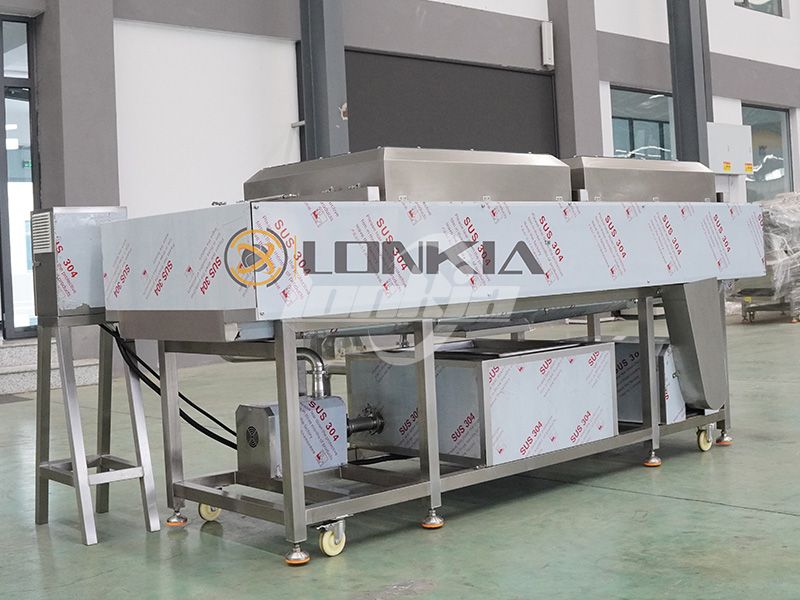
How Do Automation Features and Supporting Equipment Affect Total Costs?
If production needs are limited to washing passion fruit, purchasing a single passion fruit washing machine may suffice. However, if automatic conveying, air drying, and size grading are also required, the configuration of the entire production line should be further evaluated.
For example, adding air-drying equipment can remove some residual moisture from the fruit's surface, while adding grading equipment allows passion fruit to be sorted according to preset size ranges. Automatic feeding, conveying control, and supporting electrical systems will also increase equipment costs accordingly.
Before purchasing, it is important to clarify which functions are essential for production and which can be selected based on actual needs, to avoid omitting necessary equipment or paying extra for features that are not immediately needed.
What Other Costs Should Be Considered During Procurement?
In addition to the equipment's base price, attention should be paid to costs such as packaging and shipping, installation and commissioning, operator training, spare parts, and after-sales service. Quotations may vary among suppliers, so it is necessary to confirm in advance whether these services are included in the total price.
Furthermore, the configuration of water pumps, motors, and conveyor systems will also affect the fruit washing equipment's daily operating costs. When purchasing, it is recommended to request information from the supplier regarding installed power, actual water consumption, equipment dimensions, power supply requirements, and maintenance intervals to facilitate a comprehensive comparison of different solutions.
How to Obtain an Accurate Quote for a Passion Fruit Washer?
To ensure suppliers provide quotes that better align with actual needs, buyers should prepare the following information in advance:
- Processing Capacity: How many kilograms of passion fruit need to be washed per hour.
- Equipment Features: Whether automatic conveying, air drying, and size grading are required.
- Raw Material Characteristics: The size, ripeness, and degree of surface contamination of the passion fruit.
- Factory Conditions: Installation space, power specifications, and water supply and drainage conditions.
- Procurement Requirements: Cleaning effectiveness, delivery lead time, warranty period, and after-sales service requirements.
LONKIA can assist in evaluating suitable equipment configurations based on the customer's raw material characteristics, target production capacity, and process requirements. If the washing and grading processes need to be integrated, the processing capacities and conveyor interface conditions of each piece of equipment should be further verified to ensure smooth operation of the entire production line.
Conclusion
The total cost of a passion fruit washing machine primarily depends on equipment specifications, cleaning methods, automation levels, ancillary equipment, and delivery services. When making a purchase, one should not merely compare initial quotes but also comprehensively consider cleaning effectiveness, operational stability, ease of maintenance, and compatibility with the production line.
By clearly defining the actual processing capacity and required functions, and then providing detailed technical requirements to suppliers, you can obtain more accurate quotes and select passion fruit washing equipment that meets your long-term production needs.