

In modern food processing, beverage production, and logistics operations, plastic baskets (crates) are used daily to transport and store products. Over time, these baskets accumulate dirt, residues, and bacteria, which can affect hygiene and product safety. An automatic plastic basket washing machine is essential for maintaining cleanliness and ensuring compliance with food safety standards.
However, not every washing machine suits every business. Choosing the right model depends on your production capacity, available space, and specific cleaning requirements. This guide will help you select the best machine for your production scale.
1. Assess Your Production Capacity
The first and most important step is to determine how many baskets need to be cleaned per hour or per day.
Small-scale operations (less than 100 baskets/hour): A compact or semi-automatic washer is usually enough.
Medium-scale factories (100–500 baskets/hour): A rotary or tunnel washer provides better efficiency.
Large industrial plants (over 1000 baskets/hour): A fully automatic tunnel washing system with conveyor feeding is ideal.
Choosing the right capacity prevents both under-performance and unnecessary cost.
2. Choose the Right Machine Type
There are three main types of basket washing machines, each designed for different needs:
Single-tank washers: Simple and affordable, suitable for small workshops.
Rotary drum washers: Operate in batches, offering higher throughput for medium-sized plants.
Tunnel-type washers: Fully automatic systems with continuous operation, best for large-scale production lines.
When selecting the type, also consider whether you need an integrated drying system or a heat disinfection stage.
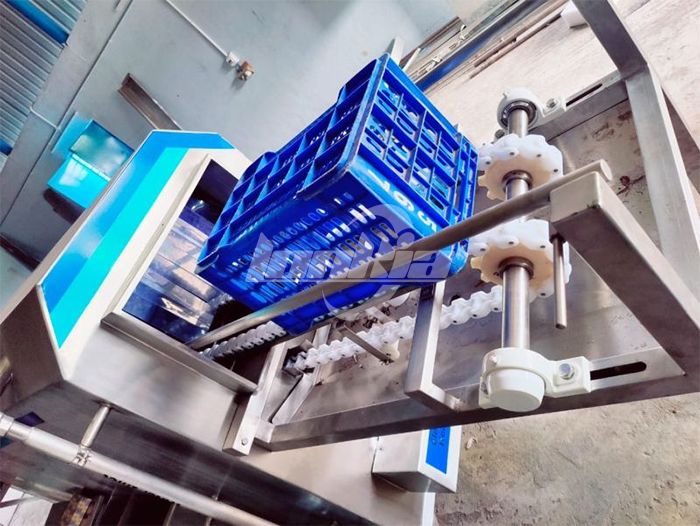
3. Check Compatibility with Your Basket Design
Your washing machine should fit the size, shape, and material of your baskets. Adjustable holders or conveyors are useful if your facility uses baskets of various dimensions.
If your baskets often carry greasy or sticky residues (like in meat, dairy, or vegetable processing), look for machines with high-pressure spray nozzles and multiple cleaning stages — including pre-wash, hot water wash, and final rinse.
4. Evaluate Automation and Labor Requirements
Automation can save a significant amount of labor.
Manual or semi-automatic washers require operators to load and unload baskets manually.
Fully automatic washers can handle feeding, washing, rinsing, and drying continuously, reducing labor costs and improving consistency.
If your production runs multiple shifts or has strict hygiene standards, investing in automation is often more cost-effective in the long term.
5. Consider Space and Utility Connections
Before purchasing, check your factory layout and utility availability.
Large washing machines require sufficient floor space, stable water supply, proper drainage, and reliable electrical or steam connections.
Make sure to leave enough room for operators, maintenance, and cleaning around the machine.
6. Focus on Hygiene and Material Quality
Since basket washing is closely linked to food safety, hygiene design is crucial. Look for machines made from stainless steel (304 or 316), with smooth surfaces that prevent residue buildup.
Other useful features include:
Removable spray nozzles for easy cleaning
Multi-stage filtration systems
Automatic temperature and detergent control
CIP (Clean-in-Place) design
High-quality construction ensures durability and compliance with food-grade requirements.
7. Balance Cost and Long-Term Efficiency
Price depends on machine capacity, automation level, and design complexity.
Small-scale washers may cost a few thousand dollars, while large tunnel systems can reach tens of thousands.
However, consider not just the purchase price — but also energy consumption, water usage, maintenance frequency, and spare part availability. The most efficient machine is the one that delivers consistent cleaning at the lowest long-term operating cost.
8. Check After-Sales Support and Spare Parts
Good after-sales support is as important as the machine itself. Choose a manufacturer or supplier that provides:
Technical guidance during installation
Training for operators
Readily available spare parts
Quick service response for maintenance
Reliable service ensures your washing line runs smoothly with minimal downtime.
9. Plan for Future Expansion
If your production volume is expected to increase, select a modular washing system that allows future upgrades — such as adding extra washing stages or extending the conveyor length. Planning ahead helps your investment stay relevant for years to come.
Conclusion
Selecting the right plastic basket washing machine is not only about price — it’s about matching the machine’s performance to your actual production scale, space, and hygiene requirements.
By evaluating your cleaning capacity, basket design, automation needs, and total operating cost, you can invest in a system that boosts efficiency, saves labor, and keeps your operations clean and compliant.
A well-chosen washing machine isn’t just equipment — it’s a long-term partner in maintaining hygiene, productivity, and product quality across your entire production process.