

In the food processing industry, the potato washer and peeler machine is an indispensable piece of core equipment in the raw material pre-processing stage. Whether for French fries, pre-cut vegetables, or root vegetable processing, the appropriate selection of equipment directly impacts production efficiency, product quality, and operating costs. This article will examine the equipment's structure, performance parameters, and practical applications to help customers make more cost-effective choices.
Defining the Core Functions of Potato Washer and Peeler Machines
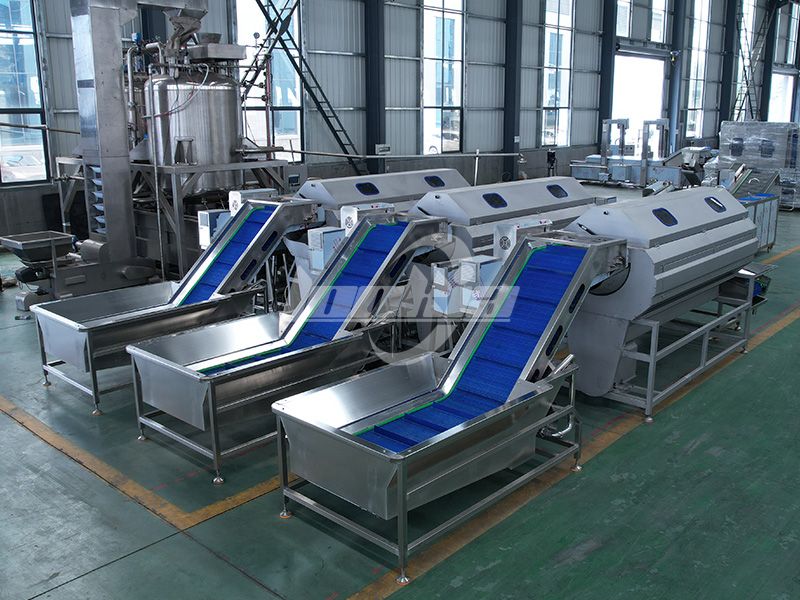
A high-quality potato washer and peeler machine typically integrates washing, peeling, and conveying into a single unit, achieving continuous processing through the synergistic action of rotating brush rolls and high-pressure spray nozzles.
Its core advantages include:
- Simultaneous washing and peeling to improve production efficiency
- Stable operation suitable for continuous production
- Reduced manual labor, lowering labor costs
👉 For users, the equipment is not merely a single-function machine but a critical component for enhancing the efficiency of the entire production line.
Selecting the Appropriate Brush Roller Configuration Based on Raw Materials
Different processing requirements demand different equipment configurations. When selecting a potato washing and peeling machine, special attention should be paid to the types of brush rollers:
- Soft-bristle brush rolls: Suitable for surface cleaning
- Hard-bristle brush rolls: Suitable for light peeling
The combination of brush rolls determines the final processing outcome. A reasonable configuration not only improves the peeling rate but also effectively reduces raw material waste.
Equipment Structure Determines Stability and Service Life
From a long-term usage perspective, equipment structure is a key factor. High-quality potato washer and peeler machines typically feature the following characteristics:
- Fully 304 stainless steel construction, corrosion-resistant and easy to clean
- Multi-roller brush design, improving processing uniformity
- Comprehensive spray system coverage, ensuring thorough cleaning
- Independent waste discharge structure, preventing blockages
These designs not only enhance equipment stability but also reduce the frequency of maintenance.
Matching Capacity Appropriately to Avoid Resource Waste
In actual production, matching production capacity is particularly important. While common equipment has a wide range of processing capacities, bigger is not necessarily better.
When selecting brush peeling machine, consider:
- Hourly processing volume requirements
- Overall production line rhythm
- Integration capability with downstream equipment
If capacity is too high, it may lead to energy waste; if capacity is insufficient, it will become a production bottleneck.
👉 We recommend systematic matching based on the design of the entire production line.
Focus on Peeling Quality and Waste Control
For most customers, the primary concerns are:
Is the peeling clean? Is raw material waste controllable?
High-quality potato washing and peeling machine typically features:
- Uniform peeling with consistent surface treatment
- Adjustable roller brush speed
- Appropriate control of friction intensity
Through optimized design, material waste can be minimized while ensuring effective peeling.
Ease of Operation and Maintenance
Modern potato washing and peeling machines place greater emphasis on the user experience and typically feature:
- Intuitive control systems
- Automated feed and discharge mechanisms
- Easy-to-disassemble and clean designs
This not only improves operational efficiency but also reduces the difficulty of daily maintenance, making the equipment better suited for long-term, stable operation.
Customization Capabilities Enhance Equipment Adaptability
Different customers vary in terms of raw materials, processing workflows, and facility conditions; therefore, the ability to customize equipment is particularly important.
Customizable features include:
- Equipment dimensions and layout
- Number and type of brush rollers
- Motor power and configuration
- Automated control systems
Lonkia can provide tailored solutions based on customer needs, ensuring the potato washer and peeler machine integrates seamlessly into production systems.
Summary: Key Considerations for Selecting the Right Equipment
When selecting a potato washer and peeler machine, focus on the following points:
- Does the operating principle meet process requirements?
- Is the brush roll configuration suitable for the raw materials?
- Is the equipment structure durable and reliable?
- Does the production capacity align with the production line?
- Does it support flexible customization?
Only by starting from actual production needs and comprehensively considering all factors can you select equipment that truly suits your business, achieving stable and efficient processing results.
If you are planning a potato processing or fresh-cut vegetable production line, selecting the right potato washer and peeler is a crucial step toward enhancing both production capacity and product quality.