

In vegetable processing, washing is a critical step that affects the final product quality. Whether it's French fries, potato chips, frozen vegetables, or salad processing lines, stable and effective washing equipment is needed to remove dirt, impurities, and residues from the surface of raw materials. For customers planning to build or upgrade a vegetable processing production line, selecting the right bubble washer is not simply a matter of comparing the equipment's appearance; rather, it requires a comprehensive assessment based on the characteristics of the raw materials, the production process, and processing requirements.
Selecting the Right Bubble Washer Based on the Raw Materials
Different vegetables vary in shape, surface structure, and resistance to damage, resulting in different requirements for washing methods.
- For leafy vegetables, such as lettuce, spinach, and Chinese cabbage, a gentler washing method is required to prevent the produce from being squeezed or damaged during the washing process. Bubble washing systems use the tumbling action of bubbles in water to ensure the vegetables come into full contact with the water flow while minimizing mechanical impact.
- For root and tuber vegetables, such as potatoes, carrots, and radishes, which typically have significant amounts of soil adhering to their surfaces, stronger water flow impact and sustained cleaning capacity are required.
Therefore, when selecting a bubble washer, attention should be paid to the equipment's water circulation capacity, spray nozzles, and cleaning zone design.
Determining Equipment Configuration Based on the Production Process
Many customers do not purchase bubble washers for standalone use but rather as a critical component of an entire vegetable processing line.
For example, in a French fry production line, raw materials typically undergo steps such as washing, peeling, and cutting; the bubble washer is primarily responsible for removing soil and surface impurities, providing clean raw materials for subsequent processing.
In a salad processing line, washed vegetables usually require further cutting, dehydration, and packaging; therefore, the washing equipment must integrate seamlessly with downstream equipment. A well-designed equipment layout enhances the continuous operation of the entire production line.
Focus on the Core Structural Design of the Bubble Washer
When selecting a bubble washer, customers should not only consider production capacity parameters but also understand the equipment's internal structure.
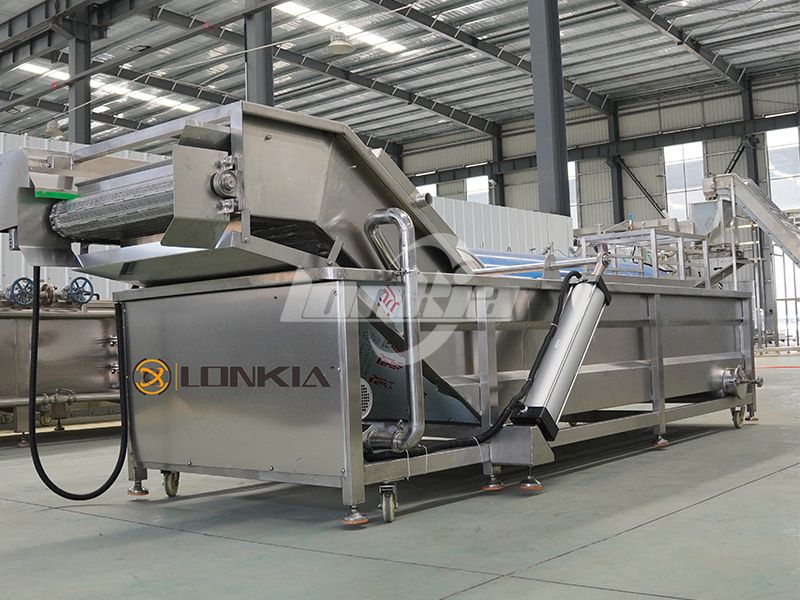
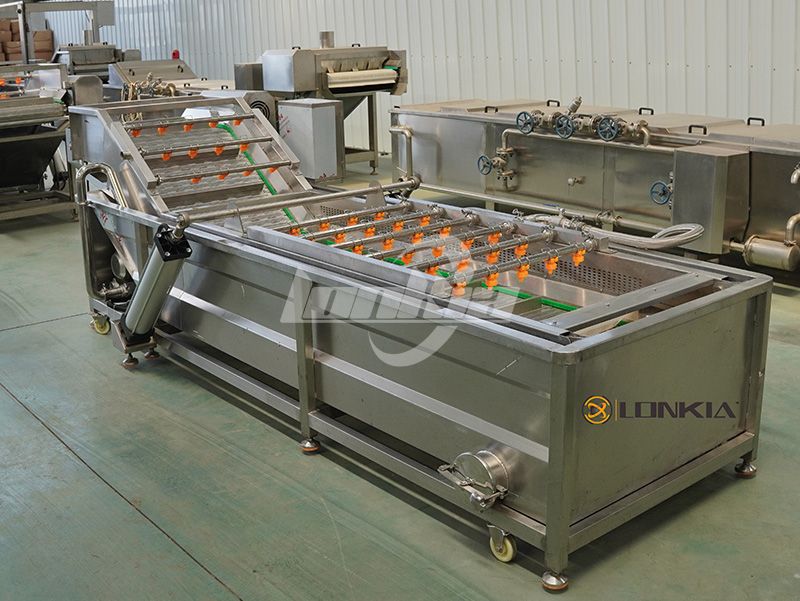
A reliably operating bubble washer typically includes:
- Washing tank: Provides the primary washing space;
- Bubble generation system: Generates a large volume of bubbles to thoroughly agitate the produce;
- Conveyor system: Controls the movement speed of the produce to ensure adequate washing time;
- Spray system: Further rinses away surface residues;
- Control system: Facilitates adjustment of equipment operating parameters.
Lonkia's fruit and vegetable washing equipment features a food-grade stainless steel construction and optimizes the washing process according to different processing needs, enabling the equipment to meet the requirements of various vegetable processing scenarios.
Selecting Equipment Parameters Based on Washing Effectiveness and Production Requirements
When purchasing a bubble washer, customers are advised to focus on the following aspects:
- Determine the daily or hourly volume of raw materials to be processed. Different production needs require different equipment configurations; properly matching processing capacity can prevent inefficient equipment operation.
- Determine the washing time required after the raw materials enter the equipment. If vegetables have a significant amount of soil on their surfaces, a more thorough washing process is needed; if processing softer products, the water flow intensity should be adjusted to preserve product integrity.
- Consider whether the equipment can be integrated into your existing production line—for example, whether it can be easily combined with vegetable cutters, dehydrators, blanchers, and other equipment.
Choose a Professional Manufacturer for a More Suitable Solution
Purchasing a bubble washer is not merely about acquiring a piece of cleaning equipment; more importantly, it is about obtaining a processing solution tailored to your specific production needs. Professional manufacturers typically adjust the equipment's structure and configuration based on the customer's raw material types, output requirements, and production processes.
Lonkia specializes in the R&D of food processing machinery and can provide corresponding washing equipment solutions for various vegetable processing projects, helping customers establish more stable and efficient processing workflows.
Summary
Selecting the right bubble washer requires a comprehensive evaluation of multiple factors, including raw material types, production processes, equipment design, and processing requirements. The correct equipment choice not only enhances cleaning effectiveness but also ensures more stable operation in subsequent processing stages.
For vegetable processing companies, clearly defining their production needs and communicating thoroughly with equipment manufacturers before purchasing a bubble washer are crucial steps in selecting the right equipment.