

In fish processing, gutting is a critical step that bridges raw material handling with subsequent washing, cutting, and sorting. Traditional manual operations not only require continuous belly-cutting and cleaning but are also susceptible to variations in operator skill and processing speed. Fish gutting machines use mechanical structures and automated controls to consolidate steps such as belly incision and viscera removal into a single unit, ensuring more stable continuous processing.
How Do Fish Gutting Machines Work?
1. Fish Enter the Processing Station
Once the fish enter the fish gutting machine, they must be positioned correctly according to the machine's processing requirements. A stable feed position helps ensure that the subsequent gutting and cleaning mechanisms act accurately on the fish. Therefore, in practical use, the size, shape, and orientation of the fish are all important factors affecting processing results.
2. Automatic abdominal incision
Once the fish reaches the designated position, the fish gutting machine uses a specially designed cutting mechanism to make an incision in the abdominal cavity. Unlike manual processing, which involves handling each fish individually with a knife, mechanized processing ensures consistent movements and positioning throughout continuous operation, thereby reducing repetitive manual labor.
3. Gutting the Fish
After the abdominal incision is made, the fish gutting machine proceeds to gut the fish. Its internal gutting system removes the internal organs from the abdominal cavity, preparing the fish for subsequent processing stages. For fish processing enterprises, the key to this step lies not only in speed but also in the thoroughness of the gutting and ensuring that the fish flesh is not unnecessarily damaged.
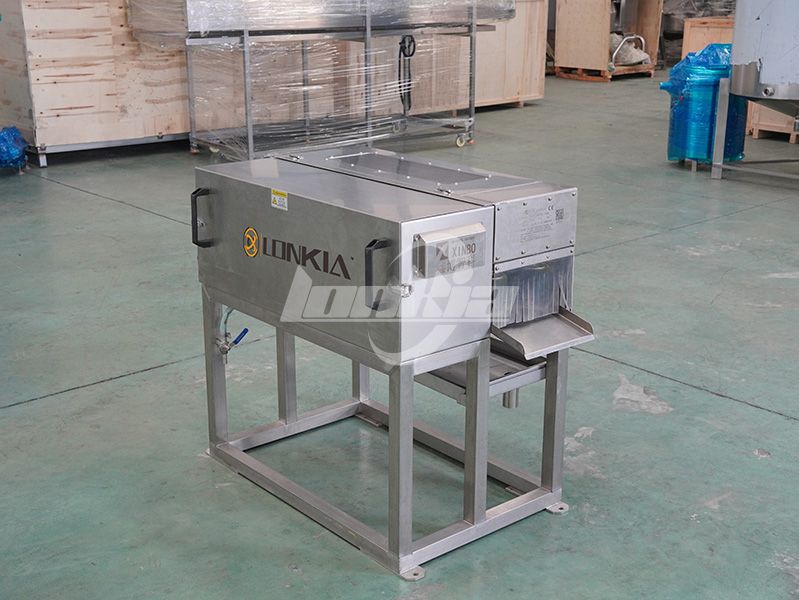
What Affects the Fish Gutting Machine's Processing Performance?
Fish Species and Body Size
Different fish species vary in body shape and abdominal cavity structure. Currently, the fish gutting machines can be used for a variety of fish, including Basa, Hairtail, Salmon, Tuna, Bass, Mackerel, Sardine, and Cod. However, before purchasing, it is still recommended to provide specific fish species, length, weight, and images of the raw material to confirm the equipment's suitability.
Equipment Specifications and Production Pace
The lonkia fish gutting machine has a processing capacity of approximately 3,000–3,600 fish per minute, with a power rating of 1–4 kW, and supports 220V/380V, 50Hz/60Hz power configurations. In actual production, these specifications must be confirmed in conjunction with the fish specifications and the processing pace of the entire production line.
What Should You Confirm Before Purchasing a Fish Gutting Machine?
Confirm Fish Species and Dimensions
Different fish species vary in body shape and internal structure. Therefore, when requesting a quote, it is recommended to provide the fish species, average weight, length, and other key dimensions, along with images of the raw material or sample information if necessary.
Confirm Actual Production Capacity
The fish gutting machine's production capacity must align with the preceding and subsequent processing stages. If the feed rate from the upstream process or the washing and cutting speeds downstream are significantly slower than the gutting equipment, the entire production line may still be constrained.
Confirm Cleaning and Maintenance Methods
Fish processing generates byproducts such as blood and internal organ residues; therefore, it is equally important that the equipment is easy to disassemble, clean, and maintain on a daily basis. A design that facilitates disassembly and cleaning helps maintain equipment hygiene after continuous production.
Selecting the Right Fish Gutting Machines
Selecting the right fish gutting machines involves more than just processing speed; it requires a careful consideration of fish species, fish size, processing volume, power supply conditions, and subsequent production processes. LONKIA can provide appropriate equipment configurations and solutions based on customers' actual processing needs, helping them achieve optimal integration from individual machines to the entire fish processing line.
If you are purchasing fish gutting equipment, providing details in advance—such as fish species, fish size specifications, target production capacity, and local power supply conditions—will enable suppliers to determine the appropriate equipment configuration more accurately.