

In the food processing industry, potato washer and peeler machines are core equipment in the potato pretreatment process. Models with bristle roller designs, in particular, are widely used in production lines for french fries, potato chips, and sliced potatoes. One of the primary concerns many buyers have at the outset is: Why is there such a wide range in prices? How can they determine whether the equipment is worth the price?
Why Are There Significant Price Differences Among Similar Machines?
The price of a potato washer and peeler machine is not determined by a single factor but is influenced by a combination of materials, configuration, production capacity, and process design.
Different manufacturers vary significantly in design standards, manufacturing precision, and the selection of key components; therefore, even if the machines look similar, the cost can differ by a factor of several times.
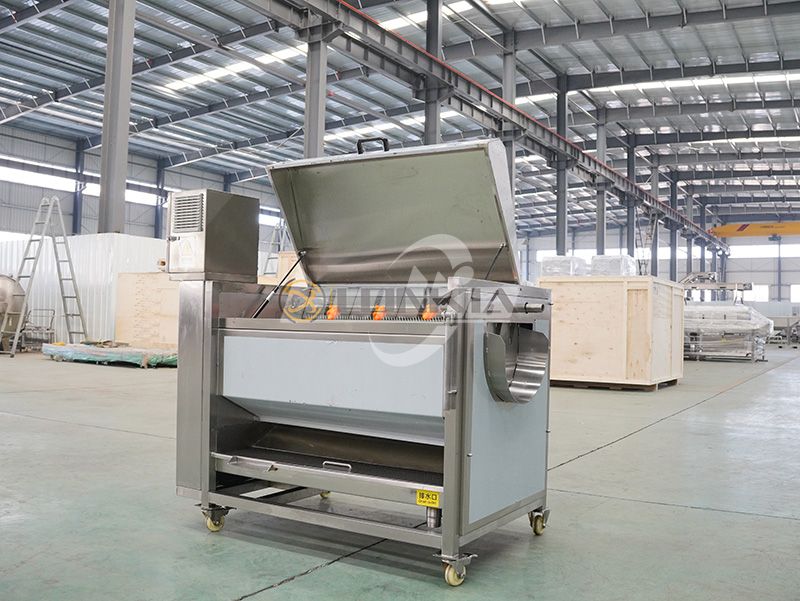
Take Lonkia industrial potato washer as an example: its overall design is geared toward industrial continuous production, with a greater emphasis on long-term operational performance in terms of stability and service life.
The Body Material Determines the Base Cost
The main body of the equipment is typically constructed from food-grade stainless steel, with 304 stainless steel being the standard configuration.
Thickness, welding techniques, and corrosion resistance all directly impact the cost.
- Thicker steel plates → More stable operational structure
- More precise welding → Fewer hygiene dead zones
- Higher-grade materials → Longer service life
When selecting equipment, customers should not focus solely on appearance but should pay close attention to the quality of the internal structure.
The Bristle Roller System is the Core Cost Component
Bristle rollers are the key components for peeling performance and are also one of the areas with the greatest price variation.
Factors affecting different configurations include:
- Bristle material (nylon, abrasive, composite brushes)
- Number and density of brush rollers
- Friction intensity and peeling efficiency
- Whether customization is available for different raw materials (e.g., potatoes, carrots, etc.)
High-quality bristle rollers achieve a more uniform peeling result while reducing raw material waste, which is a key concern for many food processing plants.
Motors and Drive Systems Affect Stability
Motor configuration directly impacts the potato washing and peeling machine's operational capability and stability.
Key factors include:
- Motor brand and power rating
- Stability of the drive mechanism
- Support for variable-frequency speed control
- Suitability for prolonged continuous operation
Although higher-standard power systems involve higher initial costs, they reduce the risk of downtime during long-term production.
Production Capacity Design and Structural Complexity
Different production capacity designs correspond to different structural scales:
- Lower-end configurations: Suitable for basic washing and peeling needs
- Mid-to-high-end configurations: Suitable for continuous processing production lines
Higher production capacity places greater demands on bristle roller length, machine frame structural strength, and the water circulation system, which in turn affects the overall price.
Additional Features and Level of Automation
Modern potato washer and peeler machines typically do more than just peel; they also include:
- High-pressure spray washing systems
- Automatic discharge mechanism
- Residue separation design
- Adjustable operating speed
Higher automation reduces reliance on manual labor but also results in more complex equipment configurations.
How to Determine if a Machine Is Reasonably Priced?
When purchasing, it is recommended to evaluate the equipment from three perspectives:
- Is the peeling efficiency consistent?
- Are long-term maintenance costs manageable?
- Does it fit the structure of your production line?
Price is only a reference factor; what matters more is the equipment's overall operational efficiency and stability.
Conclusion
The price of a potato washerand peeler machine essentially reflects a combination of material standards, the quality of the bristle roller system, and the level of industrial design. When selecting equipment, it is recommended to focus on long-term operational performance rather than a single pricing factor.
Lonkia specializes in the design of food processing pretreatment equipment and has extensive experience in bristle roller peeling systems and complete production line solutions, offering more stable configuration options for processing plants of various scales.