

Whether you’re running a busy commercial kitchen, central production facility, or large-scale food factory, an industrial pressure cooker is a cornerstone of efficient, high-volume cooking. From soups and stews to sauces and canned foods, these robust cookers deliver consistent quality, superior energy efficiency, and greater production capacity than standard kitchen equipment.
But not all industrial pressure cookers are created equal. When shopping for an industrial pressure cooker for sale, it’s important to know what features make the difference between a machine that simply works and one that propels your production forward.
This article breaks down the top features restaurants and factories should look for—so you can make a smart, long-lasting investment.
1. Large Capacity and Scalable Sizes
Industrial kitchens and food factories need equipment that matches their production volume. Industrial pressure cookers come in a wide range of sizes:
Small industrial models (50–200 L) — ideal for restaurants, catering, and test kitchens.
Medium capacity units (200–800 L) — suitable for central kitchens and mid-size producers.
Large capacity cookers (1000 L+) — built for high-throughput processing and canning plants.
👉 Tip: Choose a size that fits not just your current demand — but your future growth. Buying too small can become a bottleneck; too large can increase energy cost.
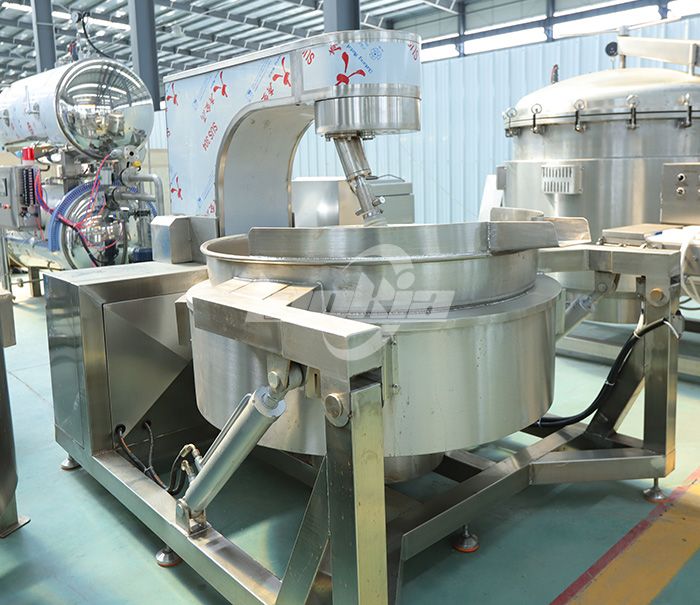
2. Heating Method: Steam, Electric, or Thermal Oil
Industrial pressure cookers can be heated in multiple ways — each with advantages:
Electric Heating
Precise temperature control
Cleaner installation (no boiler or gas line required)
Lower maintenance needs
Great for sensitive sauces and temperature-controlled cooking
Steam Heating
Rapid heat transfer
Ideal for heavy production environments
Works well with existing steam boiler systems
Thermal Oil Heating
Excellent for high viscosity products
Stable temperature across a wide range
Less thermal shock
👉 If your facility already has a steam system, a steam-heated industrial pressure cooker may be a cost-effective choice. If precision and automation are key, electric models are often the best fit.
3. High-Quality Construction and Food-Grade Materials
A true industrial pressure cooker should be built to last and safe for food production:
✔ 304 or 316 stainless steel for cooking chamber and jacket
✔ Smooth interior surface for easy cleaning
✔ Food-safe welds and sanitary design
✔ Robust hinges, latches, and seals
✔ Corrosion-resistant hardware
These features not only ensure compliance with food safety standards but also extend equipment life — reducing downtime and repair costs.
4. Accurate Control and Safety Systems
Modern industrial pressure cookers offer automation and safety systems that protect both product quality and operators:
Essential Control Features
Digital temperature controllers
Pressure monitoring & alarms
Timers with auto shutoff
Adjustable setpoints for consistent results
Key Safety Features
Over-pressure relief valves
Emergency release systems
Locking lids and interlocks
Thermal overload protection
Safety and control systems not only improve cooking results — they help prevent accidents in factory environments.
5. Efficient Heat Distribution and Insulation
Industrial pressure cooking is all about even heat transfer. Look for cookers with:
✔ Jacketed walls that distribute heat uniformly
✔ Insulated design to reduce energy loss
✔ Circulation systems to prevent hotspots
✔ Strong lid seals to maintain pressure
This ensures that every batch — whether soup, stew, or sauce — cooks evenly with minimal energy waste.
6. Automation and Integration Capabilities
For high-throughput production, the ability to integrate with other systems matters:
🔹 PLC / touchscreen controls
🔹 Timed cycles for repeatable processing
🔹 Data logging for traceability
🔹 Integration with conveyors or upstream mixing machines
These capabilities transform your industrial pressure cooker from a standalone pot into an automated production asset.
7. Easy Cleaning and Maintenance Access
Industrial kitchens process large volumes of food daily. Your pressure cooker should simplify cleaning and maintenance:
🧽 Quick-release fittings
🧼 Sloped, smooth interiors
⚙ Removable valves and sensors
🧰 Accessible service panels
Easy cleaning reduces labor costs and helps maintain hygiene standards.
8. After-Sales Support and Spare Parts Availability
A pressure cooker is a long-term investment. Make sure your manufacturer or supplier offers:
🔧 Warranty coverage
📦 Spare parts support
📘 Local or online technical assistance
👨🏫 Operator training and manuals
Good after-sales support ensures fast issue resolution and minimizes downtime.
9. Compliance with Food Safety Standards
Always verify that the industrial pressure cooker you invest in meets relevant food safety and manufacturing standards:
✔ FDA / USDA food equipment guidelines
✔ CE / ISO certification (where applicable)
✔ GMP compliance
✔ Local health & safety regulations
Compliance ensures not only safe operation but also helps with audits and regulatory inspections.
Conclusion
An industrial pressure cooker is more than just a large pot — it’s the heart of many commercial kitchens and food processing plants. Whether you need it for soups, sauces, canned foods, or bulk cooking, the right features make all the difference between inconsistent results and efficient, high-quality output.
When searching for an industrial pressure cooker for sale, pay attention to:
✅ Capacity and scalability
✅ Heating method (electric, steam, thermal)
✅ Material quality and construction
✅ Control and safety features
✅ Heat distribution and insulation
✅ Automation and integration
✅ Ease of cleaning and maintenance
✅ After-sales support and compliance
Choosing wisely will help you increase production efficiency, reduce operating costs, and deliver consistent product quality — day after day.